

Essential Functions: How to Decide What Must Continue During Disruption
Learn how to evaluate essential functions. Review dependencies, decision authority, evidence, and practical continuity actions before disruption.

Explore the connections between daily operating conditions, continuity, and risk. Start with the issue closest to your operation.
People, inventory, equipment, and system dependencies: understand what must keep moving when normal capacity changes.
Learn how to evaluate essential functions. Review dependencies, decision authority, evidence, and practical continuity actions before disruption.

Plan for reduced capacity, unavailable parts, maintenance dependencies, and the decisions needed to keep appropriate work moving during downtime.
Move from naming backup personnel to checking whether they have the knowledge, access, authority, and practice needed to carry out critical work.
Connect inventory accuracy, material movement, reorder decisions, and vendor performance to the continuity of production and customer commitments.
Trace how a staffing gap, missed delivery, or system outage can spread across dependent work, then clarify priorities and decisions before disruption.
Reduce reliance on one employee's knowledge, access, and relationships through usable documentation, cross-training, and tested backup responsibilities.
Traffic, staging, access, and everyday workarounds: connect floor-level observations to operational risk.
Examine workload, schedules, communication, and supervision when sustained pressure begins to change how operating controls perform.
Connect everyday storage, staging, and housekeeping decisions to the ability to reach exits, emergency equipment, and response routes when needed.
Review blind corners, staging changes, blocked paths, and routine workarounds to understand how people and equipment really move through a warehouse.
Review the article's general lessons about hot work, housekeeping, and emergency access without treating them as findings about the cause of a specific fire.
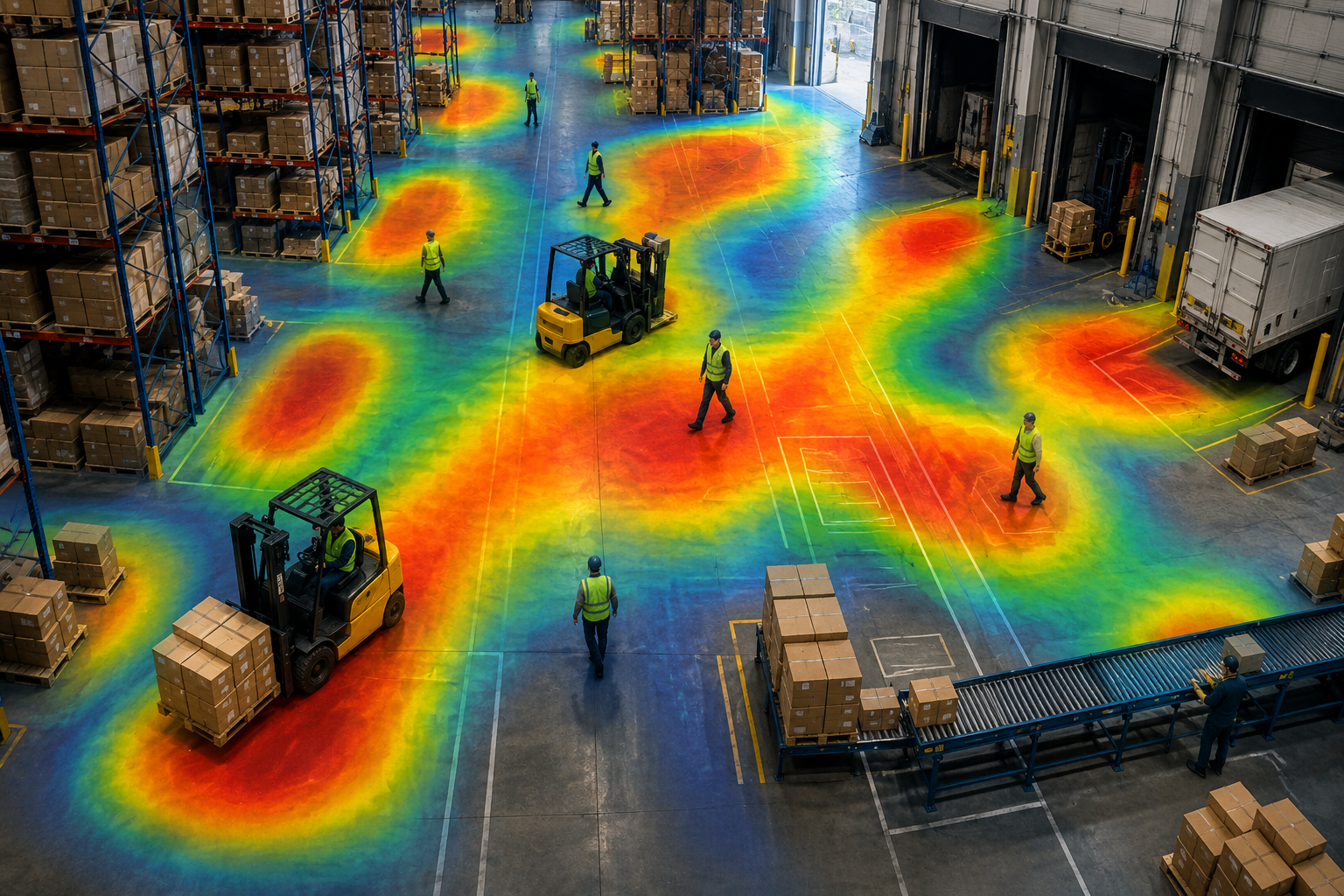
Examine how movement and congestion patterns can reveal warehouse bottlenecks, traffic conflicts, and assumptions that deserve closer review.
Challenge familiar workarounds and assumptions during operational reviews, even when the same conditions have not yet produced an incident.
Dependencies, selection, onboarding, and performance: understand the relationships that critical work relies on.
Prepare for late deliveries, partial shipments, quality problems, and shared supplier dependencies before they disrupt customer commitments.
Evaluate contractor performance from prequalification through closeout, using clear expectations and documented experience to inform future decisions.
Connect contractor documentation, supervision, equipment, and communication expectations to the work that will actually happen on site.
Compare subcontractors using communication, supervision, documentation, safety trends, and field performance—not bid price alone.
Map supplier dependencies, identify alternatives, and agree on escalation triggers before an ordinary delivery delay interrupts critical work.
Supervision, documentation, incident learning, and growth: turn operating information into accountable improvements.
Review documentation, supervision, dependencies, escalation, and continuity assumptions as new volume, locations, systems, or shifts change the operation.
Look beyond the immediate act to operating conditions, then give corrective actions an owner and a way to verify that the change works.
Examine recurring incident, supervision, training, and corrective-action patterns without assuming operational changes guarantee insurance outcomes.
Connect documentation, training records, corrective actions, and observed work so readiness does not depend on assembling evidence at the last minute.
Review how workforce variation and changing fit needs affect the usability of protective equipment and the process for addressing concerns.
Use near-miss reporting to identify recurring conditions, assign corrective action, and check whether changes actually improve the work.
Recognize how rising volume exposes weak handoffs, undocumented knowledge, and informal coordination that need more consistent operating support.
Identify the training, escalation, and operating expectations that should remain consistent across supervisors and shifts as operations grow.
Explore how injury and illness records can support pattern recognition, incident review, and operational improvement alongside applicable recordkeeping duties.
Use variation in hearing-protection practices as a prompt to examine supervision, work conditions, and the consistency of everyday controls.
Ramsay Resilience Group can help connect a specific risk, continuity, warehouse, or exercise question to an appropriate assessment or consulting scope.