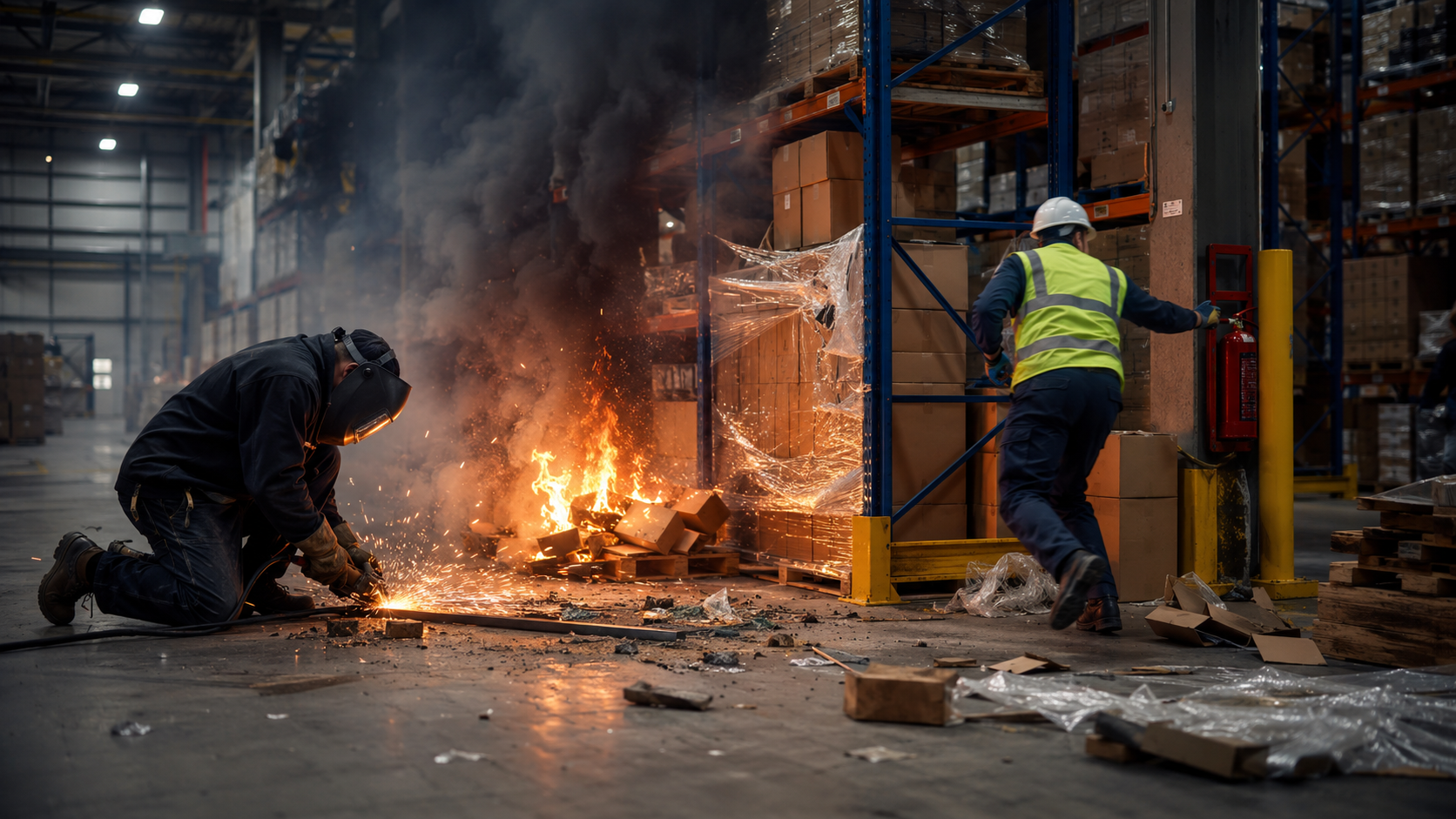
Emergency plans often receive attention during annual reviews or drills. The day-to-day condition of the facility receives less attention, even though ordinary storage and staging decisions can determine whether people can move, communicate, and access critical equipment when conditions deteriorate.
Readiness is physical
A written evacuation route is useful only if the route remains usable. Fire equipment is useful only if people can reach it. Emergency access is useful only if temporary materials, pallets, carts, or work-in-process have not quietly changed the path.
Warehouses change continuously. Inventory arrives, staging expands, seasonal volume increases, and equipment is parked wherever space is available. Emergency readiness therefore has to be maintained as an operating condition, not treated as a static document.
Include access in routine floor reviews
- Are exits and travel paths clear and obvious?
- Can employees reach emergency equipment without moving stored material?
- Have temporary staging areas become permanent?
- Do doors, gates, or security controls affect evacuation?
- Are aisle widths and turning areas changing under peak volume?
- Do all shifts know who communicates and who accounts for people?
Test degraded conditions
Exercises should consider that the emergency may remove normal visibility, power, systems, or access. A route that is easy to follow during normal operations may be harder to use during smoke, darkness, noise, or congestion. Leaders should ask whether the plan still works when information is incomplete and people are under stress.
This does not require creating unsafe simulations. Tabletop exercises and controlled walkthroughs can reveal where assumptions depend on perfect conditions.
Make housekeeping part of resilience
Housekeeping is often framed as appearance or basic safety. It is also continuity. Clear paths, controlled storage, and predictable access give responders and employees more options when something changes quickly.
Readiness reviews should include contractors, temporary workers, and visitors where appropriate because they may not know the facility as well as regular employees. If the plan only works for people who have memorized the building, the system may be less resilient than leadership assumes.
Emergency readiness is built in ordinary operating decisions long before an alarm. Facilities that protect access every day are better positioned to respond when minutes matter.